Step 2: check your licence, B or C?
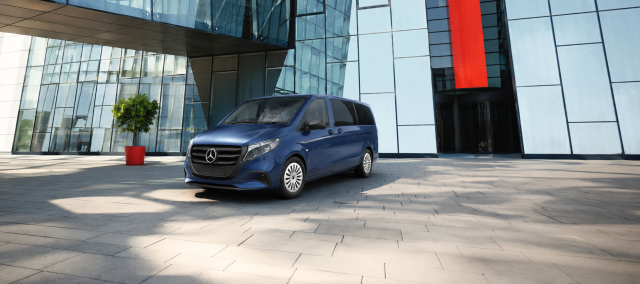
This is crucial and many people forget it. A 7-seater car you can drive on a B licence (up to 3.5 tonnes). An 8- or 9-seater minibus requires a C or C1 licence.
Check your licence. Do you have category B? You're good for a 7-seater. No C? You must stick with a 7-seater.
Unsure or not confident? A Service Shop helps you choose without fuss. Better to ask one question now than discover on the road you can't drive that vehicle.
Step 3: pack smart, what actually fits?
The luggage puzzle. Seven people means seven suitcases, backpacks, kids' toys and more. A minibus solves this. A 7-seater... fills up fast.
Practical tips: use storage under seats, buy roof boxes (you can rent these from Dockx), and think twice before adding a fourth suitcase. Ask yourselves: are kids coming too? How often do we wash en route? Are you a minimalist traveller or do you pack 'for every possibility'?
Dockx offers roof boxes and bike racks. Add them when you book, it saves a lot of stress.
Step 4: kilometres and fuel
How many kilometres for your trip? A holiday to Spain or Italy quickly means 1,500 to 3,000 kilometres.
Check your contract: how many kilometres are included? Unlimited driving? Or do you pay extra per kilometre over? This sets your budget.
Rule: better pick a larger kilometre package than pay supplements on the road. Dockx makes this clear, the price shows straight on the booking screen.
Step 5: insurance, basic or comprehensive?
Insurance isn't glamorous, but it's essential. Dockx offers basic cover and an optional upgrade.
Basic insurance usually covers damage with an excess. Want to avoid that? Choose excess-free insurance. It costs a bit more, but you'll sleep better. Especially with seven people in one car, one accident and your holiday is over.
Read the terms: will you drive in southern Europe too, or is your route entirely Belgium and northern France? Check what's covered outside your home country.
Step 6: crossing borders, documents and rules
Crossing a border? You need documents: passports for everyone, green card (international insurance papers), copy of your booking confirmation.
Belgium to France, Germany or Netherlands? No visa needed (Schengen), but passports must come. Going further south? Check entry rules for Italy, Spain, Croatia.
Key rule: have your green card. This document proves your car is internationally insured. Police can ask for it. Dockx ensures you have it, but don't forget it in the car.
Step 7: what if you want to extend?
You're there, weather is perfect, and you want to stay two days longer. Is that possible?
Call Dockx as soon as you realize you're extending. Usually you can keep the car longer, especially if there's no conflicting next booking. Extra days cost money, but it's doable.
Don't leave this to chance: better book one extra day upfront and come home earlier than discover on the road your car must leave tomorrow afternoon.
Departure checklist: what to bring?
The night before, quick check:
- Driving licence and ID of all drivers.
- Passports if you're crossing a border.
- Green card (provided by Dockx).
- Booking confirmation, on your phone or printed.
- Dockx contact details for the road: breakdown, call direct.
- Child seats/booster cushions for young children (check upfront what you need).
- Lights, reflector strips and warning triangle (mandatory in many countries).
- Medicines and your home country insurance papers.