
Is a tachograph mandatory since 1 July 2026?
You drive a 3.5-tonne van to northern France to deliver goods to a client. Since 1 July 2026 you need a smart tachograph to do so. Send that same van with your own equipment to a site across the border, and an exemption may apply. But only under two conditions. Below you will find from which weight the obligation applies, when the exemption holds, and what to do if you only cross the border a few times a year.

A tachograph is a device in the cab that records driving behaviour: driving time, rest time, speed and border crossings. During a roadside check, the inspector reads out that data. New installations must use the version 2 smart tachograph. It records border crossings automatically by satellite, with no input from the driver.</p> <p>Every driver also needs a personal driver card. The card is issued in the driver's name, is not transferable, and your driver applies for it directly with the FPS Mobility and Transport.

From which weight is a tachograph mandatory?

That depends on the maximum authorised mass (MAM) of the vehicle and on the type of journey.

  • Above 3.5 tonnes: mandatory for goods transport. Nothing has changed here.
  • Between 2.5 and 3.5 tonnes: mandatory for international goods transport since 1 July 2026. An exemption exists.
  • Below 2.5 tonnes: not applicable.
  • Within Belgium only, under 3.5 tonnes: not applicable.

The extension to 2.5 tonnes comes from Regulation (EU) 2020/1054. It targets light vehicles, which increasingly carry goods internationally.

Are you transporting for a client or for yourself?

This is where companies most often get it wrong. For vehicles between 2.5 and 3.5 tonnes an exemption exists, but you must meet both conditions at the same time:

  1. The goods transport is carried out on own account by the driver or the company.
  2. Driving is not the driver's main activity, meaning less than 50% of their total working time.

Meet one condition but not the other, and a tachograph is still required.

An example. An installer sends a technician to a site just across the border. That technician drives for four hours and installs for four hours. The transport is on own account and driving is not the main activity, so the exemption applies. If the same technician spends the whole day driving from site to site, the exemption no longer applies.

By situation:

  • Above 3.5 tonnes. Always a tachograph for goods transport, regardless of who you drive for.
  • Between 2.5 and 3.5 tonnes, international transport for a client. Tachograph mandatory.
  • Between 2.5 and 3.5 tonnes, international transport of your own goods. Exempt, provided your driver spends less than half their working time behind the wheel. If they mainly drive, a tachograph is required.
  • Below 3.5 tonnes, within Belgium only. No tachograph.

Unsure about your own situation? Check with the FPS Mobility and Transport or with your transport federation. Getting it wrong costs more than a phone call.

What does this mean for your planning?

  • Driving and rest times become measurable. Breaks are no longer an estimate.
  • The data must be downloaded and stored periodically.
  • Your driver must operate the device correctly. Incorrect entries also count as an offence.
  • Checks take place at the roadside and afterwards, based on the recorded data.

One point is often misjudged. Responsibility lies with the company on whose behalf the transport is carried out. If you rent a vehicle, you remain responsible for compliance.

Rent or equip your own fleet?

Having a tachograph installed is a one-off investment, followed by recurring costs for calibration, data downloads and storage. If you drive internationally all year round, that investment pays for itself.

Only crossing the border a few times a year, or covering a temporary peak? Then renting is the simpler calculation. You do not adapt your own fleet for journeys you make occasionally.

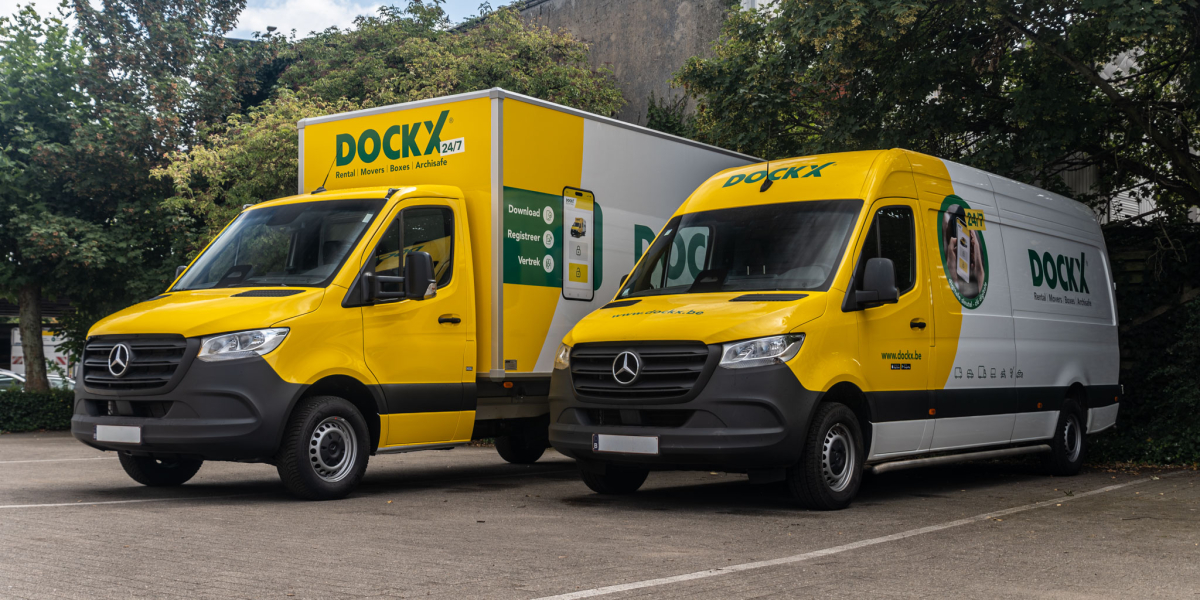
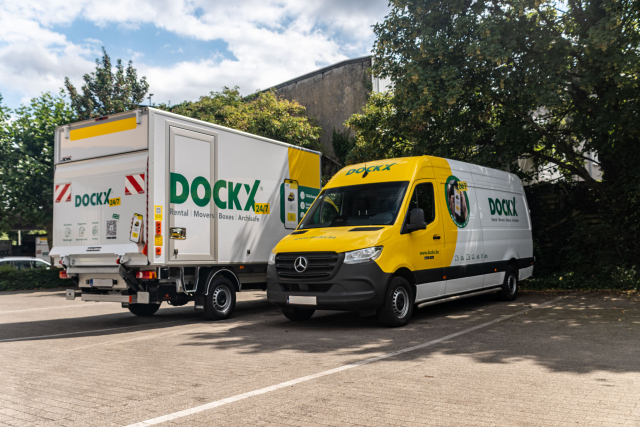
Dockx Rental offers two models with a tachograph, both of which you can drive on a category B licence:

You book both online on their own page and collect the vehicle at a Service Shop near you.

What we do not arrange: the driver card. Your driver applies for it directly with the FPS Mobility and Transport, in their own name.

Book online

Do I need a tachograph if I only drive in Belgium?

Not for vehicles under 3.5 tonnes. The obligation for the 2.5 to 3.5 tonne band applies only to international goods transport. Above 3.5 tonnes the tachograph obligation does apply, including within Belgium.

From which weight is a tachograph mandatory?

Above 3.5 tonnes MAM a tachograph is mandatory for goods transport. Between 2.5 and 3.5 tonnes it has been mandatory since 1 July 2026 for international goods transport, unless you qualify for the exemption. Below 2.5 tonnes there is no obligation.

I carry my own goods. Am I exempt?

Only if you meet two conditions at the same time. The transport is carried out on own account by the driver or the company, and driving is not the driver's main activity, meaning less than 50% of their total working time. Meet only one of the two and a tachograph is required.

Does my driver need a driver card?

Yes, as soon as the vehicle falls under the tachograph obligation. The card is issued in the driver's name and is not transferable. Your driver applies for it directly with the FPS Mobility and Transport.

Can I rent a van with a tachograph from Dockx Rental?

Yes. Dockx Rental offers two models with a tachograph: the Easy Box tachograph with 19.60 m³ and the Mega Van XL tachograph with 14.00 m³. You can drive both on a category B licence. You book them online on their own page and collect the vehicle at a Service Shop.

Who is responsible during a check: the renter or the rental company?

The company on whose behalf the transport is carried out. For a rented vehicle that is the renter, not Dockx Rental. You remain responsible for the driver card, correct use of the device and compliance with driving and rest times.